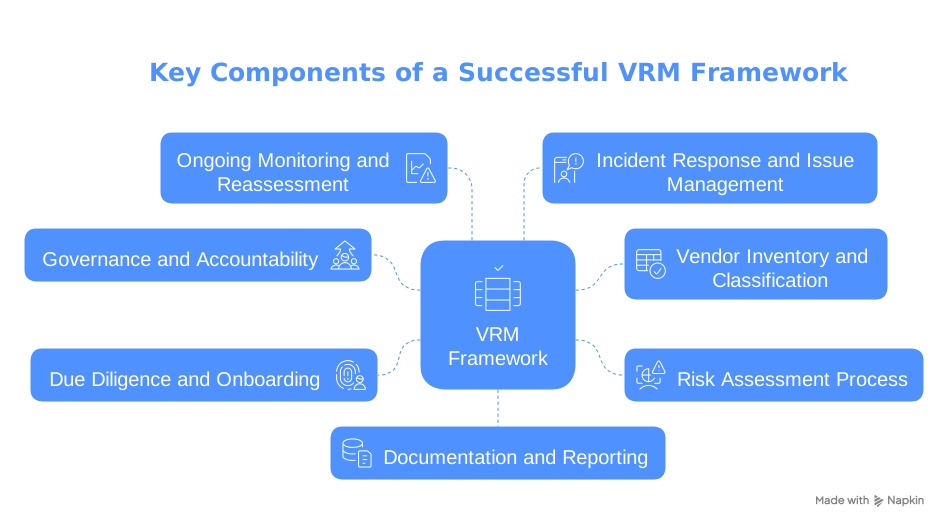
Vendor risk management breaks down if it lives as a loose collection of spreadsheets, questionnaires, and one-off approvals. A real framework gives you a repeatable way to handle vendors from first review through ongoing oversight.
The core pieces are straightforward.
1. Governance and Accountability
Someone has to own the program. In practice that means clear leadership support, a named owner, and a defined decision path for approvals, exceptions, and risk acceptance.
Without that, vendor work gets split across procurement, security, legal, and operations without a clear decision-maker.
2. Inventory and Classification
Start with a complete vendor register and a simple risk tiering model.
The register should tell you what the vendor does, what data or systems it touches, who owns the relationship, and how risky the relationship is. Tiering then decides how much scrutiny and monitoring each vendor gets.
3. Risk Assessment
Every vendor should be assessed using the same logic.
Define what you evaluate, how you score it, and when you reassess. That makes the process defensible and much easier to explain to auditors or leadership.
4. Due Diligence and Onboarding
High-risk vendors need more than a contract signature.
Build a standard intake and review process so you know what evidence is required before a vendor gets access to your environment, your data, or your customers.
5. Ongoing Monitoring
Vendor risk changes over time.
Your framework should say what gets monitored, how often it gets checked, and what triggers a review. This is where the framework moves from point-in-time due diligence to continuous control.
6. Incident Response and Issue Management
Vendor incidents need to flow into the same response process you use for internal incidents.
That means clear escalation paths, contact points, logging, and follow-up actions. If vendor issues are handled separately, response quality usually drops.
7. Documentation and Reporting
If it is not documented, it is hard to govern.
Keep the vendor register, assessments, monitoring results, incidents, and decisions in one controlled system. Then report trends to the people who need to act on them.
What Good Looks Like
A usable VRM framework is not complicated. It usually has:
- a named owner and clear responsibilities
- a maintained vendor inventory
- a simple tiering and assessment model
- onboarding checks tied to risk level
- ongoing monitoring for higher-risk vendors
- incident handling integrated into the ISMS
- records and reporting that support decisions
The point is not to create more paperwork. The point is to make vendor decisions consistent, explainable, and repeatable.
If you want a framework that actually survives contact with real operations, keep the process small enough to run and strict enough to trust.