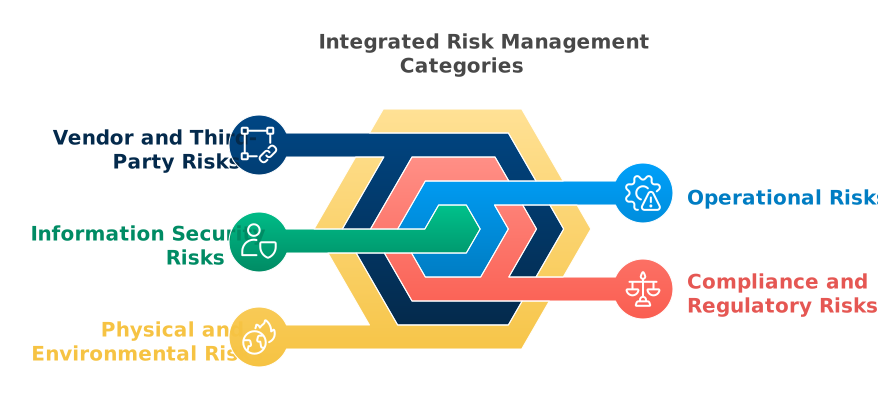
In a fast-moving business environment, risks show up from every direction. Cyberattacks are only part of the picture. Service outages, compliance gaps, vendor failures, and even physical security incidents can all disrupt operations and damage trust.
This post breaks risk down into five practical categories that modern companies should actively consider. The point is not to create theory for theory’s sake. It is to make risk management easier to understand, easier to structure, and easier to act on.
1. Information Security Risks
Protecting sensitive data such as customer data, intellectual property, and employee records is critical for any company. Cloud-based systems, remote work, and connected tools expand the attack surface, so teams need to manage risks tied to:
- unauthorized access
- data breaches
- malware
- phishing
- insecure APIs and endpoints
- employee devices
High-probability example
Phishing attacks target remote employees who use personal devices for work, resulting in compromised credentials and unauthorized access to company systems.
See a list of top information security risks to monitor in 2025
2. Operational Risks
Operational risk covers losses caused by internal shortcomings, human error, or system failures. In an information security context, it also includes disruption caused by cyberattacks, breaches, and system instability that affect availability, privacy, and delivery.
These risks matter because they show up directly in day-to-day work and customer experience.
High-probability example
An outage in a critical SaaS platform such as a CRM or project management system causes delays in client deliverables and breaks communication between teams.
See and download a list of 25 example operational risks
3. Compliance and Regulatory Risks
Compliance and regulatory risks cover legal penalties, reputational damage, or business interruptions caused by failure to meet laws, regulations, and contractual obligations.
In information security, this often includes frameworks and regulations such as:
- GDPR
- CCPA
- NIS 2
- DORA
These risks become more important when a business operates across multiple jurisdictions, handles sensitive data, or depends heavily on cloud services and third-party processors.
High-probability example
The company fails to map and document data flows well enough for GDPR compliance, then faces regulatory exposure during an audit or breach investigation.
4. Vendor and Third-Party Risks
Modern companies depend on cloud vendors, software providers, consultants, and outsourced services. That creates risks tied to third-party performance, security posture, contractual reliability, and business continuity.
If a vendor has an outage, suffers a breach, or fails to deliver, your organization still absorbs the impact.
High-probability example
A breach at a cloud storage provider exposes sensitive company or client data, leading to reputational damage and potential customer loss.
5. Physical and Environmental Risks
Even in a cloud-first company, physical and environmental risks still matter. These include risks tied to office access, device theft, power or infrastructure failure, and environmental events that interrupt operations.
This category also includes maintaining a safe and workable environment for employees, whether they work on-site or remotely.
High-probability example
Company laptops are stolen from an office or coworking space, creating data exposure if the devices are not properly encrypted.
Summary
Modern risk management needs a wider lens than a single security checklist. Information security, operational, compliance, vendor, and physical risks all affect whether a company can deliver reliably and protect what matters.
Once teams understand these categories, risk management becomes more concrete. You can map risks more consistently, assign ownership more clearly, and decide where to focus next. That is what turns risk management from theory into something operationally useful.